
Disc Herniation
A herniated disc can turn everyday activities into a painful challenge. Whether the pain stays in your back or radiates into your arm or leg, Dr. Brandon McCutcheon at Premier Neurosurgery has the expertise to diagnose your condition accurately and create a treatment plan that gets you moving comfortably again.
What Is a Herniated Disc?
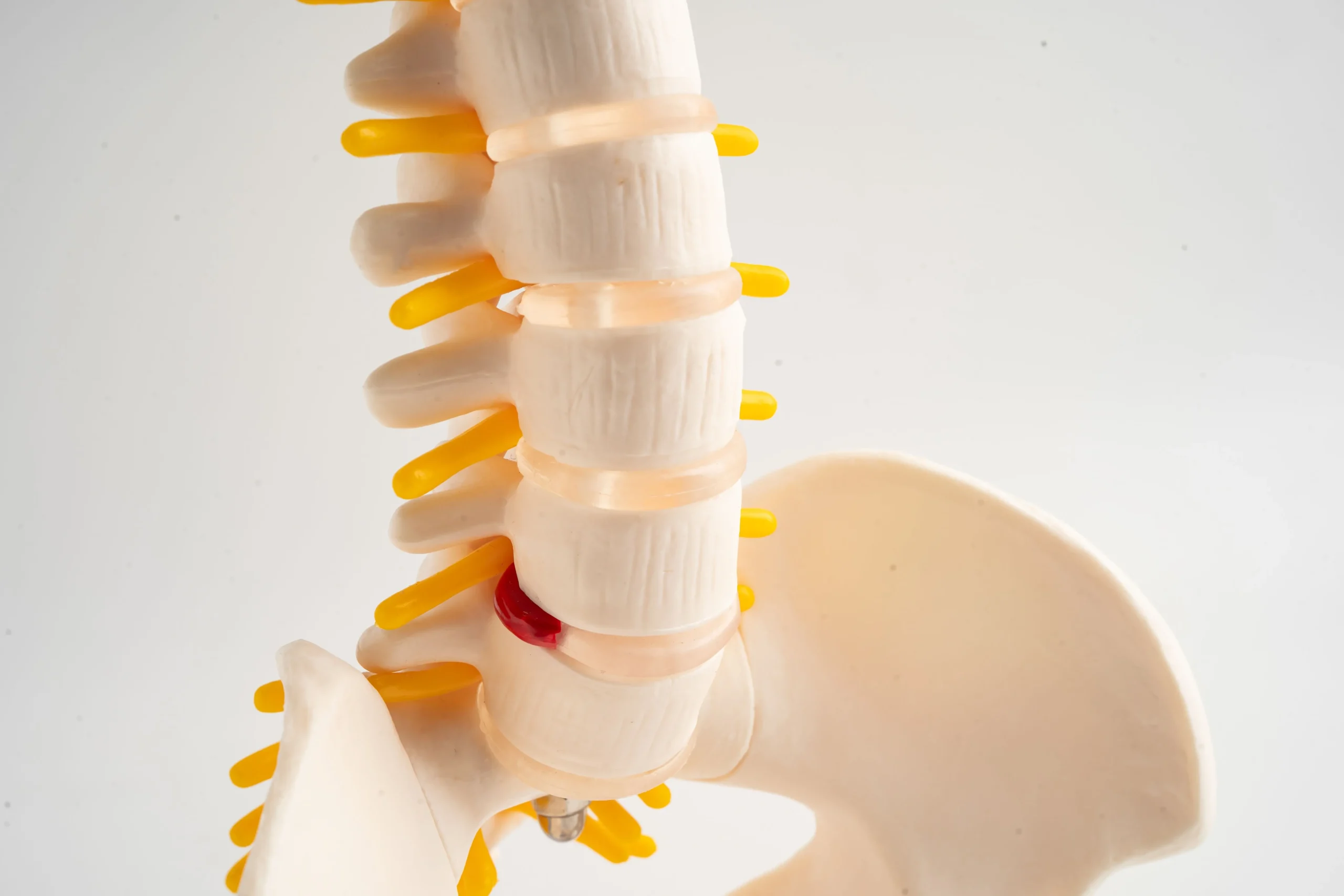
Between each of the bones in your spine, known as vertebrae, sits a spinal disc. These discs act as shock absorbers, providing cushioning and flexibility that allow your spine to bend, twist, and bear load throughout the day. Each disc has two main components: a tough, fibrous outer ring called the annulus fibrosus, and a soft, gel-like center called the nucleus pulposus.
A herniated disc, sometimes called a slipped disc or ruptured disc, occurs when the soft inner material pushes through a crack or tear in the outer ring. This herniated material can press against nearby nerve roots or the spinal cord itself, triggering pain, numbness, tingling, or weakness in the area those nerves supply. Disc herniation can occur at any level of the spine but is most common in the lower back (lumbar spine) and the neck (cervical spine).
Why Do Discs Herniate?
Most disc herniations are the result of gradual, age-related wear. Over time, the water content in spinal discs decreases, making them less flexible and more prone to cracking under normal stresses. This degenerative process means that even routine activities like bending, lifting, or twisting can eventually cause a disc to herniate in someone whose discs have already been weakened.
Acute injuries can also cause disc herniation, particularly from sudden heavy lifting, a direct fall, or a traumatic impact. However, in many cases, a herniation is the final step in a process that was already underway, meaning that even a relatively minor event can be the trigger for a disc that was already compromised.
Certain risk factors increase the likelihood of disc herniation, including a sedentary lifestyle, excess body weight that puts additional load on the spine, prolonged periods of sitting, repetitive lifting or bending at work, and a genetic predisposition toward disc degeneration.
Recognizing the Symptoms of a Herniated Disc
The symptoms of a herniated disc depend largely on where the herniation occurs and whether it is pressing on a nerve. Not all herniations cause symptoms; some people are found to have disc herniation incidentally on imaging without any pain at all.
In the lumbar spine, a herniated disc most often causes low back pain combined with pain that radiates into the buttock, leg, and sometimes the foot, a pattern known as sciatica. Patients may also experience numbness, tingling, or weakness in the affected leg, and symptoms often intensify with sitting, bending forward, or coughing.
In the cervical spine, a herniated disc can cause neck pain and stiffness along with pain, numbness, or weakness that travels into the shoulder, arm, and hand. In more severe cases involving significant spinal cord compression in the neck, symptoms can include difficulty with balance, coordination problems, or changes that involve both sides of the body.
How Dr. McCutcheon Diagnoses a Herniated Disc
Diagnosis begins with a careful history and physical examination. Dr. McCutcheon will ask about your symptoms, what makes them worse or better, and how they are affecting your daily life. He will test your reflexes, strength, sensation, and range of motion to identify where the nerve involvement may be occurring.
Imaging is essential to confirm the diagnosis and plan treatment. MRI is the most valuable tool for visualizing herniated discs, as it shows the discs, nerves, and spinal cord in great detail. CT scans and X-rays may also be ordered to evaluate bone structure and alignment. In select cases, an EMG or nerve conduction study may be used to assess nerve function.
Treatment Options for Herniated Discs
The majority of herniated discs improve with conservative treatment. This may include rest and activity modification, physical therapy focused on core strengthening and flexibility, anti-inflammatory medications or nerve pain medications, epidural steroid injections to reduce inflammation around the affected nerve, and postural training to reduce stress on the spine.
When conservative measures do not provide adequate relief, or when there is significant nerve compression, progressive weakness, or loss of function, surgery may be necessary. The most common surgical treatment for a herniated disc is a microdiscectomy, a minimally invasive procedure in which the portion of the disc pressing on the nerve is carefully removed.
In cases where there is spinal instability or severe degeneration, additional procedures such as spinal fusion or disc replacement may be considered. Dr. McCutcheon specializes in minimally invasive spine surgery techniques that can reduce recovery time. Every treatment plan is personalized based on your unique symptoms, imaging findings, and goals.
Living with a Herniated Disc: When to Seek Help
If you are experiencing persistent back or neck pain, radiating pain into your arms or legs, numbness, tingling, or weakness, it is important to seek an evaluation. Early diagnosis and treatment can prevent symptoms from worsening and help you avoid long-term complications.
Some symptoms require urgent attention. If you develop sudden severe weakness, loss of bladder or bowel control, or difficulty walking, you should seek medical care immediately, as these may indicate significant nerve or spinal cord compression.
Dr. McCutcheon and the team at Premier Neurosurgery are here to provide expert evaluation, clear answers, and effective treatment options to help you regain your quality of life.
Ready to Address Your Disc Herniation?
Schedule a consultation with Dr. McCutcheon to discuss your symptoms and explore personalized treatment options.